
White crust, spots on glasses or a taste you dislike
Crust around faucets, film on glass, a chlorine smell or a taste from the tap can send homeowners shopping for equipment. These symptoms have more than one cause, and a filter, a softener and a plumbing repair solve different things. The right equipment depends on the problem, which is where water softener and filtration planning begins.
Test your tap before you buy anything
We do not state a hardness number for Woodridge, because neither the Village report nor the DuPage Water Commission report prints one. Sizing a softener from a guess wastes money. A test of your own tap tells you what is actually in your water.
- Read the Village's annual water quality report, which covers the previous year
- Test your own tap with a certified lab kit if you have a specific concern
- Write down what you notice, such as taste, odor, film or staining
- Tell us the symptoms so we can match equipment to the problem
The Village buys treated water from the DuPage Water Commission, which takes it from Lake Michigan through the City of Chicago. You can read about that on the Commission's page and find the Village's report on its 2026 water quality report. We do not diagnose health effects, and a plumber cannot tell you what is safe to drink.
Softener, filter or both
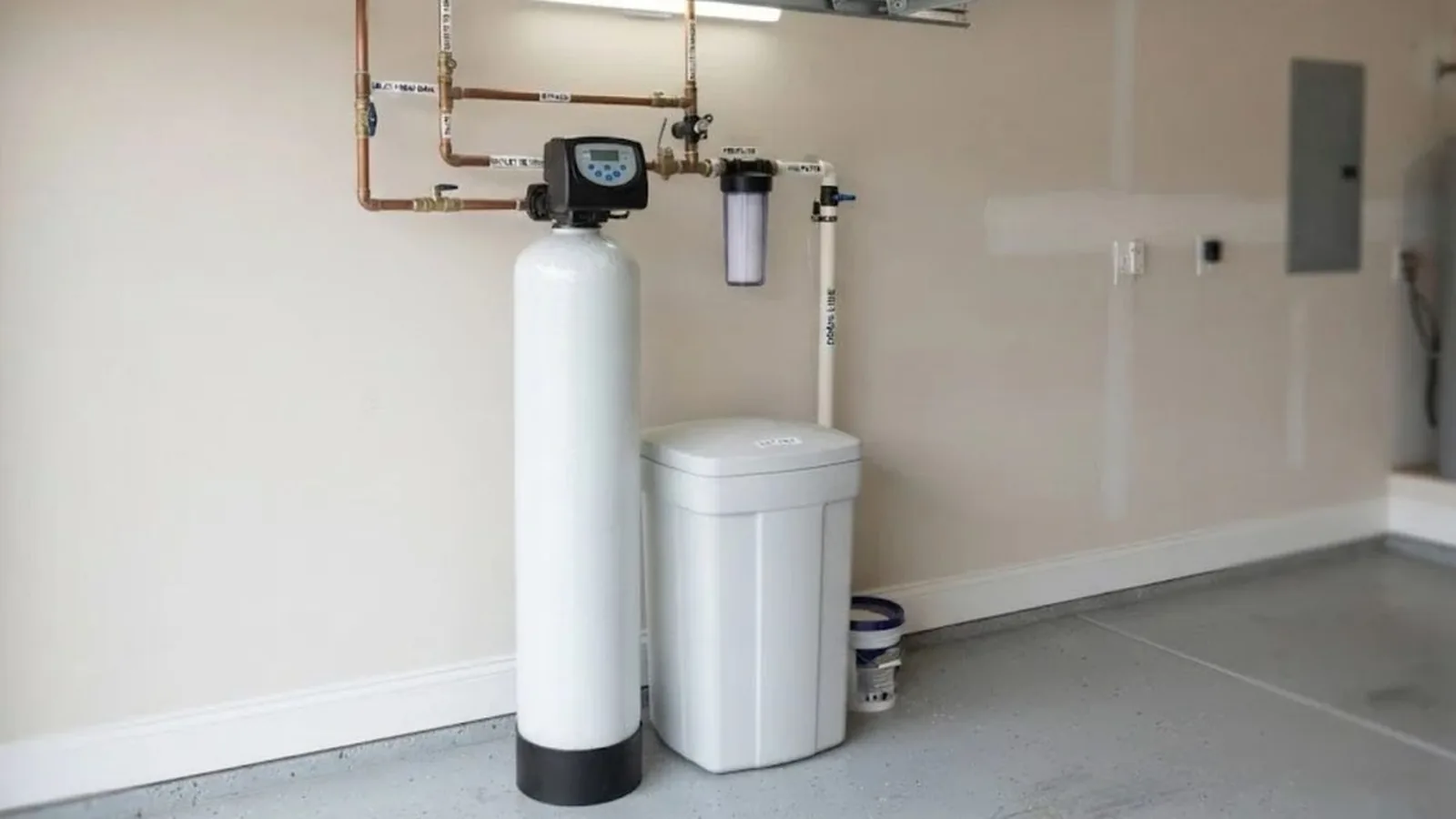
A softener uses a resin tank and a brine tank to exchange minerals. A filter removes particles or taste and odor compounds, usually with a cartridge or a carbon tank. A whole-house unit treats every tap. An under-sink unit treats one.
| What you want to change | Equipment that fits | What we do |
|---|---|---|
| Scale on fixtures, if testing supports it | Softener on the main line | Install with a bypass and drain connection |
| Taste or odor at every tap | Whole-house carbon filter | Install on the main with a bypass |
| Better drinking water only | Under-sink filter | Mount, connect and set the faucet |
| Sediment or cloudy water | Sediment filter | Install and show you the change schedule |
| Existing unit stopped working | Repair or replace parts | Test the valve, resin, brine tank and controls |
Equipment treats a problem the test has shown. It is not a substitute for the test.
Softener and conditioner repair
Most softener failures come from a few places. The control valve may fail to cycle. A salt bridge can form in the brine tank, where a crust hides empty space below. The resin can wear out, the injector can clog, or a drain line can kink. Salt that does not seem to be used is a clue.
We check the valve timing, brine draw, drain flow and bypass, then tell you whether a part or the unit is the better fix. Older units sometimes cost more to repair than to replace, and we say so plainly. If you want the repair history to date from the install, keep the model label and any receipts handy.
Do not reach into the brine well
If something has fallen into the brine well, such as a tool or a utility knife, do not reach in. The well is narrow, the water is salty and a blade can cut you. Leave the lid off the unit alone and call us. Retrieving a dropped item is a simple job for the right tool.
How the install connects to your plumbing
A softener or whole-house filter ties into the main water line near where it enters the house, with a bypass valve so you can isolate it. It also needs a drain connection for backwash or regeneration and, for softeners, an electrical outlet nearby. A tight basement or a main in an odd spot can change the layout.
The Village lists all electrical and plumbing work as permit-required, so ask Community Development at 630-719-4750 whether your install needs a permit. Plumbers must be licensed under State statutes. Our plumbing installation team handles the supply, drain and shutoff work around the equipment.
Equipment, scale and your water heater
Mineral deposits, when your testing confirms them, collect inside a water heater and reduce efficiency. If you own a tankless unit, scale is a leading reason to flush it, and our tankless water heater service covers that. A tank heater lasts longer when the tank is flushed and the anode rod is checked.
Treatment equipment will not fix a leaking faucet or a failing fixture, and it will not help a pipe that is rusting inside. If rust is the issue, ask about repiping. If you are in nearby Naperville, the city utility prints its own report, so check which water report applies to your address.
What affects the cost of softener and filter work
The equipment, the install and the plumbing around it all change the total, so one figure would mislead you. You get a clear price before work starts.
Insurance policies differ. Treatment equipment is usually not a covered item, but damage from a sudden leak at a unit may be handled differently. Read your policy or ask your agent first.
Softener and filter plumbing falls under the plumbing code, and a licensed plumber can tie it in. The Village of Woodridge has adopted the Illinois State Plumbing Code, and permitted work is inspected against that standard.
Questions we hear
We do not give a number, because the Village report does not print one. Test your tap and read the Village's annual water quality report before you choose equipment.
Maybe. Tell us when you notice it and at which taps, since the cause could be the water, the heater or a fixture. A test tells you more than the symptom.
A salt bridge, a stuck valve or worn resin are the usual causes. We test the cycle and the brine draw, then tell you whether it is a part or a replacement.
Yes. Bring the model and any parts it came with, and we will check the connections you need before the visit.
Not always. Spots can come from the rinse aid, the dishwasher or the water. Test first, then decide.
No. Leave it and call. The tool we use for this is simple and keeps your hand out of the well.
Yes. If a unit is leaking, close its bypass or the main valve and call the 24/7 line. We will tell you what to leave alone until the plumber arrives.
If you also have a water heater concern, our water heater repair team can check it during the same visit.