
Water under the tank, and what to do before we arrive
A leaking water heater is the most common reason people call us about this appliance, and the leak is rarely where it first looks. Water that runs down the outside of the tank may come from the fitting above it, from the relief valve, or from the tank wall itself. The source decides whether a repair makes sense.
- Close the cold water shutoff on the pipe feeding the top of the heater
- Electric unit: turn off its breaker. Gas unit: turn the gas control to off
- Move stored boxes and electronics off the floor around the tank
- Take photos of the water and the tank label for your records
- Do not open the hot tap to drain a scalding tank. Wait for the water to cool
If you smell gas at any point, leave the house first. Move a safe distance away, then call Nicor Gas on 888-642-6748 or 911. Gas smells come before any plumbing call, and the Nicor emergency page lays out the same steps.
Where the water comes from
| Where the water appears | Likely cause | Repairable? |
|---|---|---|
| Dripping from the pipes on top | Loose or corroded inlet or outlet fitting | Usually yes, fitting or connector replaced |
| Trickle from the pipe near the side or bottom of the tank | Temperature and pressure relief valve discharging, or too much pressure in the system | Often yes, valve replaced and pressure checked |
| Wet around the lower access panel on an electric tank | Failed heating element gasket | Often yes, element and gasket replaced |
| Puddle that grows from the base of the tank | Corroded tank shell | No. The tank needs to be replaced |
| Rust-colored drips at the drain valve | Worn drain valve | Yes, valve replaced |
We confirm the source with a dry paper towel test and a flashlight before any part is ordered.
When a leaking water heater is an emergency
Treat it as urgent if water is spreading across a finished floor, reaching a furnace or electrical panel, or coming out faster than a drip. Shut the water and power off, then call. We take after-hours and weekend calls on the same 24/7 line, and we work toward a same-day appointment when one is available.
A hot, pressurized tank can scald. If the relief valve is blowing steam or very hot water, stay clear of the discharge pipe and let us handle it.
No hot water, or not enough
When the shower runs cold, the cause depends on the fuel. A gas unit with a pilot that will not stay lit often has a worn thermocouple or a dirty burner. An electric unit that gives lukewarm water usually has one of its two elements burned out, and a unit that gives nothing may have a tripped high-limit switch.
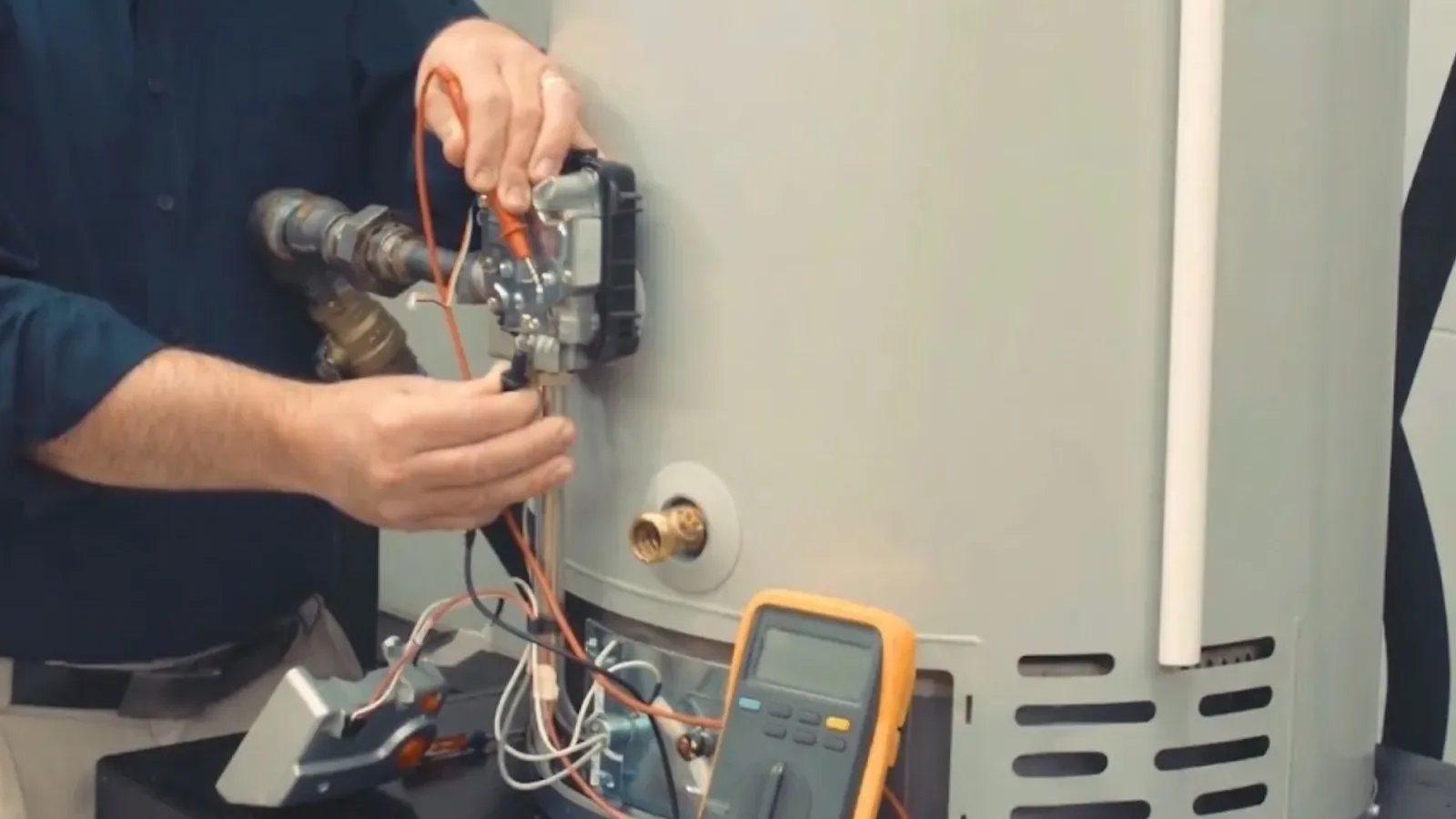
We test before we replace. A meter checks the elements and thermostats, and we look at the gas control and venting on a gas heater. Many of these repairs are finished in one visit when the part is on the truck.
Gas or electric, what we check on each
Gas units
Pilot and thermocouple, burner, gas control valve, flue draft and the vent connection. Combustion and venting get a careful look every time.
Electric units
Upper and lower heating elements, thermostats, high-limit reset and the wiring to the breaker.
Both types
Relief valve, drain valve, inlet and outlet connections, anode rod condition and any sign of rust at the tank base.
Hybrid and heat pump units have different service needs, and a tankless unit needs its own flushing routine. Tell us the make and model when you call, and we will say whether we can work on it.
Repair or replace the heater
A repair makes sense when the tank is sound and the failed part is small. It stops making sense when the shell is leaking, when the unit has failed more than once in a short stretch, or when the repair costs a large share of a new heater. We lay out both options so you can decide with the facts.
If the tank is done, a full water heater replacement is the honest answer, and we will say so rather than sell you a part. For a planned swap on your own schedule, see how a water heater installation is handled.
Why Woodridge water heaters fail
Roughly seven in ten Woodridge homes were built before 1990, and the median home dates to 1980. Original supply valves, shutoffs and connectors in those houses are well past the age most were made to last. A heater repair often turns up a seized shutoff valve beside it, and we replace that too so you can isolate the tank next time.
Your water comes from Lake Michigan through the DuPage Water Commission and the Village Public Works system. The Village report does not print a hardness figure, so test your tap or ask the Village for its annual water quality report. Sediment collects at the bottom of any tank over time, and a flush and anode rod check slow the corrosion.
Winter matters too. January lows average about 19 degrees at the nearest weather station, so a heater in an unheated garage or a cold corner of the basement works harder and sees condensation on its flue.
Permits and who you hire
Woodridge's permit FAQ says a water heater needs a permit and a final inspection. That applies when a heater is replaced, and a repair that changes the venting or gas connection may need one too. Ask Community Development at 630-719-4750 if you are not sure about your job. See the Village's permit FAQ for the rule in its own words.
Plumbing contractors in Illinois must be licensed, and you can check any plumber's license on the IDPH licensing page. We are licensed and insured. We also work on heaters in nearby Lisle, just north-west of us.
What changes the price of a water heater repair
A thermostat swap and a gas valve replacement are not the same job, so one number would mislead you. We give you a clear price before work starts, based on what the test shows.
Insurance policies differ. Many treat a sudden tank failure differently from slow leaks and wear, so read your policy or ask your agent before you file.
A repair that swaps a tank or changes connections can trigger a permit. The Village of Woodridge has adopted the Illinois State Plumbing Code, and permitted work is inspected against that standard.
Questions we hear
Yes. The line is open 24/7 and we take overnight, weekend and holiday calls for leaking and failed heaters. Shut off the water to the tank and the power or gas while you wait, and tell us what you see.
A puddle that keeps growing at the base usually means the tank shell has rusted through. That cannot be patched. Water from the relief valve or a fitting above is a different story and is often repairable.
It depends on the cause. A dead element, a bad thermostat or a pilot that will not light is a repair. A tank that is leaking and also not heating usually needs replacing.
Often it is sediment cooking at the bottom of the tank. A flush may help. If the noise comes with a leak or weak hot water, have it checked.
Often yes. A young tank usually has a sound shell, so a bad part is worth replacing. We test first and tell you what failed.
Yes. We drain sediment, check the anode rod, test the relief valve and inspect the connections and venting.
Replacing a heater needs a permit and a final inspection. For a repair, call Community Development at 630-719-4750 and ask whether your work is covered.
Yes. Landlords and property managers can call about a single unit or a shared mechanical room. We explain the cause so the right party pays.
If the tank turns out to be past saving, a replacement visit can follow the same day when schedules allow.