
My drain keeps backing up even though it was snaked
If a plumber cleared your line and the water came back a few weeks later, the cable most likely opened a narrow channel and left the pipe wall coated. Grease, root hairs and mineral scale stay stuck to the sides, and new waste catches on them within weeks.
Hydro jetting is the answer to that pattern. Instead of poking through the middle, it washes the full circle of the pipe, so the line returns to its working size.
How a jetter clears a line
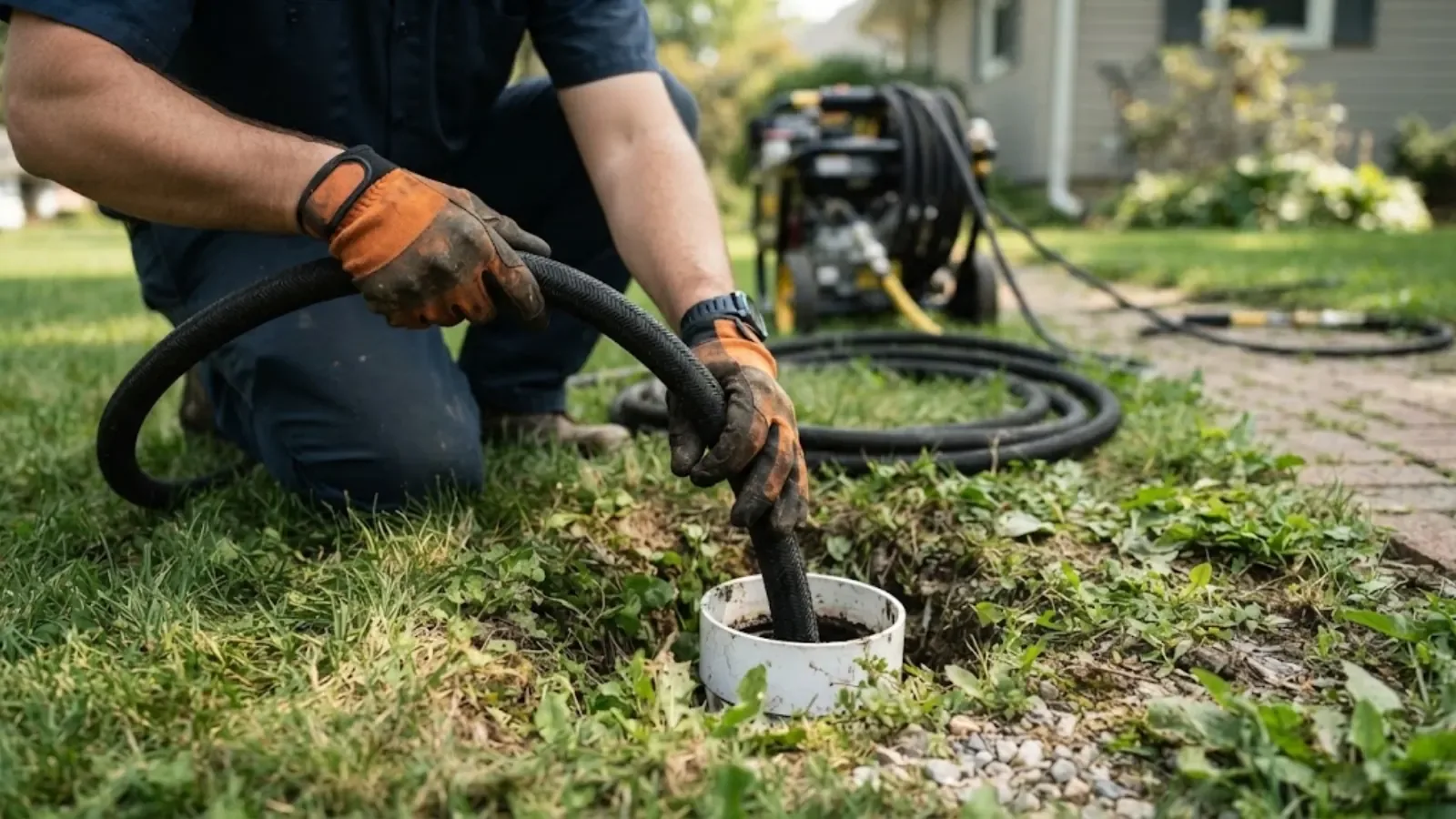
A jetter is a pump and hose on a truck or cart. The hose ends in a nozzle with several small openings. Water leaves through them under high pressure, and the jets pointed backward pull the hose forward through the pipe while the forward jets break up the clog.
- We look at the line first with a camera when the backup allows it, so we know what is in there and whether the pipe can take the pressure.
- We open the line through a cleanout, or through a fixture if there is no cleanout.
- The nozzle goes in and works forward, starting at low pressure and stepping up only as the pipe condition allows.
- We pull the hose back slowly. This is the pass that scours the walls and flushes debris toward the main.
- A second camera run confirms the walls are clean and shows anything the water exposed, such as a cracked joint.
Pressure is a tool, not a goal. A solid cast iron or plastic line takes a firm cleaning. A thin or cracked clay pipe does not, and we adjust or choose another method after the camera shows what we are working with.
Cable or jetter, which one fits your clog
| Situation | Cable machine | Hydro jetting |
|---|---|---|
| First-time clog in one sink or tub | Usually enough | Rarely needed |
| Kitchen line coated with cooled grease | Opens a hole, grease returns | Strips the wall, best fit |
| Fine roots growing in at clay joints | Cuts the roots, they regrow | Flushes cut roots out of the line |
| Rust and scale in old cast iron | Little effect on the wall | Scours scale back toward bare pipe |
| Pipe is cracked, offset or collapsed | Can snag or make it worse | Not suited, repair comes first |
We decide after we see the line. If a cable will do the job, we say so and do not sell you the larger machine.
Grease, roots and scale, the three things jetting is for
Grease
Cooking fat cools into a paste that lines kitchen and main drains. Water at pressure breaks it loose and carries it away.
Roots
Roots work into joints and spread into a mat. A cutting head removes the bulk, then the jetter washes the pieces out.
Scale
Mineral and rust buildup narrows old iron pipe from the inside. Jetting restores the opening so waste flows freely again.
For a single stubborn fixture, a plain drain cleaning visit may be all you need. Jetting earns its place when the same line has been cleared before and the problem is still there.
Sewage backup, what to do before the jetter arrives
A backup in a tub, shower or basement floor drain is urgent, and we take those calls overnight and on weekends. Sewage carries bacteria, so the first job is keeping people out of it.
- Stop using sinks, toilets, the dishwasher and the washing machine.
- Keep children and pets out of the wet area, and do not step in the water with bare feet.
- Stay away from standing water near outlets, power strips and the furnace. Shut off power at the panel only if you can reach it dry.
- Note which fixtures are affected and when it started, then tell the dispatcher.
- If you smell gas, leave the house first and call Nicor Gas on 888-642-6748 or 911 before anything else.
Same-day appointments are available when the schedule allows, and the 24/7 line takes the calls that cannot wait. Photograph the damage before cleanup begins, which helps if you file a claim later.
When jetting is the wrong move
Water pressure cannot repair a broken pipe. If the camera shows a collapsed section, a bad offset at a joint or a belly that holds water, jetting only moves the problem along. In that case we explain what the footage shows and recommend sewer line repair so you are not paying for cleanings that do not last.
Water also finds its way out of a cracked pipe. Jetting a damaged line without looking first can wash soil away around it, which is why the camera comes first whenever the backup allows.
What Woodridge lines tend to carry
The median Woodridge home dates to 1980, and about seven in ten were built before 1990. Cast iron stacks and older laterals in houses that age have had decades to gather scale, so the first jetting often pulls out more buildup than owners expect. If your clogs started after you moved in, ask for a camera inspection so you can see the pipe yourself.
The Village collects sewage in the street, and it asks residents with a backup to call Public Works so the public line can be checked. After hours the Village says to dial 911. If our camera shows the blockage sits beyond your property, we tell you to make that call rather than keep cleaning your side. The Village explains the process on its sanitary sewer page.
Woodridge prohibits draining sump pump water, pool water and downspout drainage into the sanitary sewer. A sump discharge plumbed to a drain can overload the line in a heavy rain, and jetting will not stop that. Moving the discharge outside does.
Across the boundary in Downers Grove, sanitary sewers belong to a separate sanitary district, so a backup there may involve a different public agency than it would here.
What changes the cost of hydro jetting
Jetting a short kitchen line and jetting a long main are very different jobs. You get a clear price before work starts, based on the line we find.
Policies differ. Many treat a sudden backup differently from slow buildup, and some need added sewer backup coverage. Read your policy or ask your agent before you file.
Jetting itself is maintenance, but any repair found afterward is covered by the code. The Village of Woodridge has adopted the Illinois State Plumbing Code, and permitted work is inspected against that standard.
Questions we hear
Yes. The line is open 24/7 and we take overnight, weekend and holiday backup calls. Tell the dispatcher which fixtures are affected, stop using water in the house, and we schedule jetting once the camera shows the line can take it.
A cable clears a path through the clog but leaves grease, roots and scale on the pipe wall. New waste catches on that coating, and the line slows down again. Jetting removes the coating itself.
In a sound line, no. In a cracked, thin or badly corroded pipe, high pressure can make things worse. That is why we run a camera first and set the pressure to the pipe, not to a default.
Neither is better in every case. A cable suits a simple blockage in one fixture. Jetting suits grease, scale and roots along a line, especially one that keeps clogging.
It depends on the cause. A grease-coated kitchen line stays open as long as the grease habits change. Roots regrow in a leaking joint, so a root problem usually comes back until the joint is fixed.
Yes. Send the unit address and the fixtures affected, and we find whether the problem is in the unit branch or the shared line so the work goes to the right owner.
Woodridge sits on the Village sewer system, so septic tanks are rare here. If you have a private system, tell us on the call.
If you are unsure which method your line needs, a camera look at the sewer line answers it before you spend anything on cleaning.