
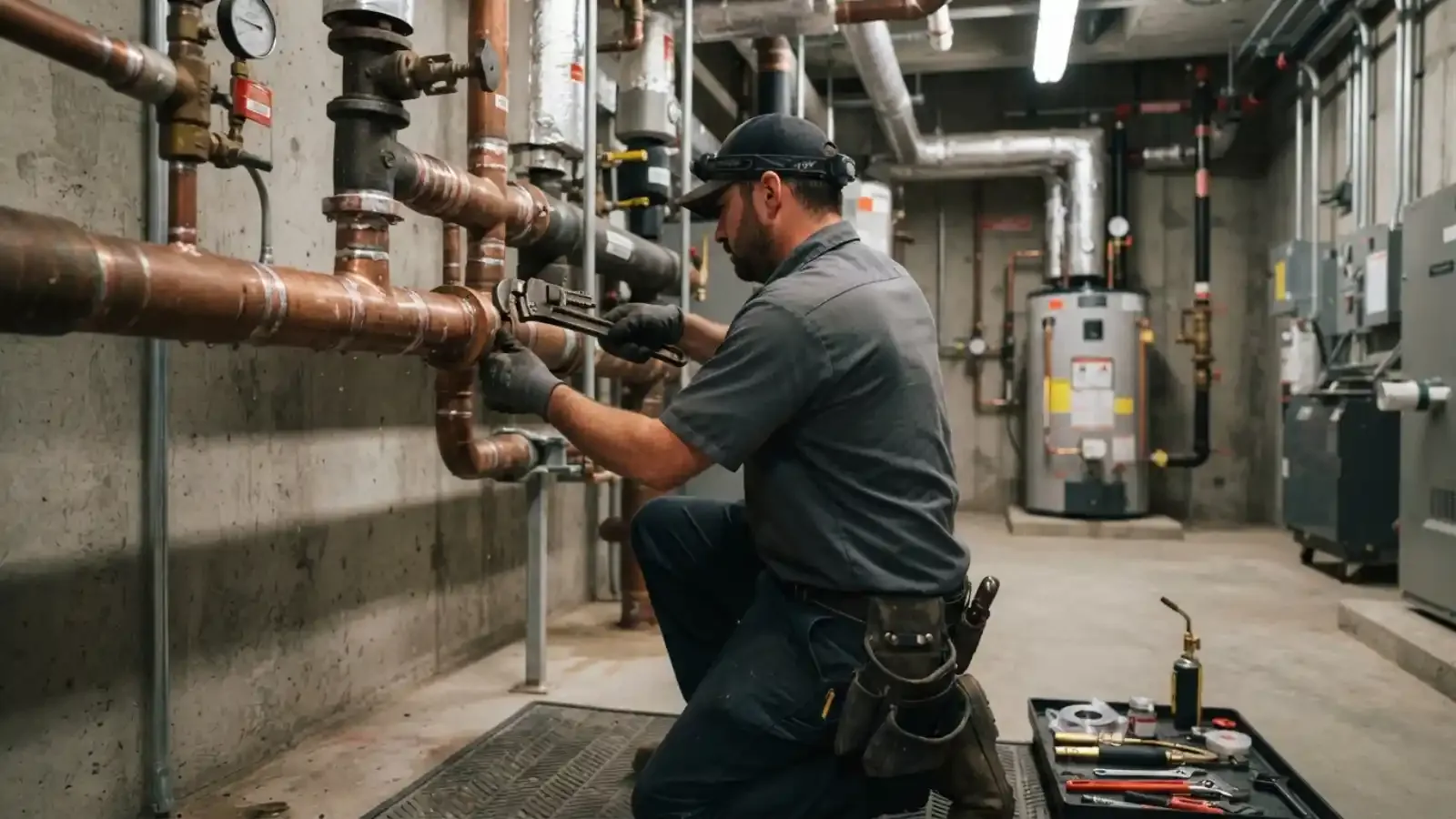
Commercial leak detection when the source is hidden
Large buildings hide leaks well. Water can run inside a wall, under a slab or along a ceiling for a long way before it shows. A water bill that jumps with no change in use, a damp spot in a parking lot, or a warm patch on a floor are the usual clues.
We start by closing every fixture and watching the meter, because a moving meter proves a leak exists. Then we narrow it with pressure tests on isolated sections, acoustic listening for the sound of escaping water, and moisture readings on suspect walls. Cameras go into drain lines when the leak is on the waste side. Our leak detection service describes the same tools for homes.
Once found, the leak is repaired where it is, not guessed at. You receive a written note of where it was and what we did, which helps with your records.
When a flooded floor or backed-up restroom shuts you down
Treat it as urgent if sewage is rising in floor drains or toilets, if water is spreading toward electrical equipment, or if the leak is running faster than staff can contain. Public health matters here. Do not let people walk through sewage, and close the affected area.
- Close the nearest isolation valve, or the main water shutoff
- Stop using restrooms, sinks and dishwashers on the affected line
- Keep people and pets out of wet or sewage-contaminated areas
- Cover or unplug electrical equipment only if you can do it safely and dry
- Call the building owner or property manager, then call our 24/7 line
We take after-hours calls for commercial water and drain failures. A same-day appointment is available when a slot is open, and a restaurant that needs to reopen for lunch will want to say so on the phone.
Property managers and multi-unit buildings
Managers need to know whose problem it is before they pay. A branch line serving one unit is usually that unit's concern, while a shared stack or main belongs to the building. We diagnose the cause and name the affected line so the repair bill goes to the right place.
For rentals and apartment communities, we can coordinate access with your office and note the unit numbers on a written findings sheet. If a leak damaged more than one unit, photos and findings help with insurance and tenant communication. We also take commercial calls in nearby Naperville.
Restaurants, kitchens and grease
Commercial kitchens send fat and food solids down the drain all day. In a grease interceptor, the fat rises and settles in the tank while cleaner water leaves. When the tank is full or the lines before it are coated, kitchens back up at the worst moment, such as the dinner rush.
Pumping the interceptor tank is generally hauler work. We handle the plumbing around it, which means clearing the kitchen drains, hydro jetting coated lines, checking the fittings and baffles we can reach, and finding why a line keeps backing up. Ask on the phone about your specific setup. Local rules on grease interceptors vary, so ask Community Development what your location needs.
What we see in commercial plumbing
| Situation | Likely cause | What we do |
|---|---|---|
| Water bill jumps, no visible leak | Hidden line leak, running fixture or slab leak | Meter test, pressure test, acoustic locate |
| Restroom floor drain bubbles | Branch or main drain blockage | Camera, cable or jet the line |
| Kitchen drains back up at peak hours | Grease buildup in lines or interceptor | Jet the line, inspect, advise on hauling |
| Wet ceiling below a restroom | Failed flush valve, supply or drain joint | Open access, locate and repair |
| Water pooling in a parking lot | Buried supply or drain line leak | Locate and map the leak |
| Lift station alarm or floor drain overflow | Pump failure or blocked discharge | Service the pump and clear the line |
We diagnose before we quote repairs, so a camera or pressure test comes first.
Floor drains, lift pumps and restrooms
Floor drains in service bays, kitchens and mechanical rooms catch spills and washdown water. Unused ones dry out and let sewer gas rise, so pouring water into them keeps the trap sealed. A drain that overflows after a heavy rain can mean a downspout or sump line is tied into the sanitary system, which the Village prohibits.
Below-grade restrooms may rely on a lift pump to push waste up to the sewer. When the pump fails or its float sticks, the pit overflows. We repair or replace the pump, clear the discharge line and check the alarm. A sump pump in a mechanical room is a related but separate problem.
Office and retail restrooms mostly need flush valve rebuilds, leaking faucets and clogged drains.
The Woodridge commercial setting
Woodridge sits at the crossroads of I-55 and I-355 and along 75th Street, a four-lane county highway through the middle of the village, with Seven Bridges as its mixed-use development. Businesses along those routes often sit in buildings with shared plumbing, so a leak in one suite can affect neighbors.
The Village lists all electrical and plumbing work as permit-required work, and Community Development at 630-719-4750 can tell you what your project needs. Public Works handles collection of sanitary sewage, and its rules prohibit draining sump pump water, pool water or downspouts into the sanitary sewer. After hours, the Village says to dial 911 for a sewer backup in the public line.
What shapes the cost of commercial plumbing work
A single clogged floor drain and a hidden leak under a slab are different jobs, so we do not offer a flat number. You receive a clear price before work starts.
Commercial insurance policies differ. Many treat sudden water damage differently from slow leaks and wear. Read your policy or ask your agent before you file a claim.
Commercial work almost always involves permits and inspections. The Village of Woodridge has adopted the Illinois State Plumbing Code, and permitted work is inspected against that standard.
Questions we hear
Yes. The line is open 24/7 for businesses and rentals, including nights, weekends and holidays. Tell us what the building is, where the water is, and whether anyone is on site.
Yes. We diagnose which line is affected and write down the unit numbers, so the repair reaches the right party. A single point of contact on site speeds access.
Often yes. A meter test, pressure test and acoustic listening narrow the source before we open anything.
Tank pumping is usually done by a separate hauler. We clear and jet the lines around the interceptor and tell you what we see. Ask on the phone about your setup.
Keep people away from the area, stop water use on that line, and call. A blocked main, a failed pump or a tied-in downspout can all cause it.
Yes. We rebuild flush valves, replace faucets and clear drains. For fixtures at home, see our faucet repair service.
The Village lists all electrical and plumbing work as permit-required. Ask Community Development at 630-719-4750 about your project.
If a customer-facing drain keeps backing up, a sewer inspection shows what is causing it before it happens again.