
Reasons to put a camera in the line
Most people call for a camera after something goes wrong. Some of the best reasons come before that. A short run of video can save you from paying for the wrong repair.
Repeat clogs
The drain was cleared and came back. The camera shows whether roots, a sag or a cracked joint is behind it.
Buying a house
Sellers rarely know what is under the lawn. A recording gives you a basis to ask for a repair or a lower price.
Odor or wet ground
A sewer smell in the basement or a soggy patch in the yard can mean an open joint. The locator marks it.
Before a repair
A camera measures the problem before lining or digging, so the plan fits the pipe you actually have.
What the video can and cannot show
| What you see on screen | What it usually means | Typical next step |
|---|---|---|
| Fine roots at a joint | Roots found a gap and are growing in | Cut and jet the line, then seal the joint |
| Standing water in a low run | A belly where the pipe has settled | Monitor it, or correct the section if it traps waste |
| A straight crack or long split | Soil movement or an aging pipe | Spot repair or lining, depending on the pipe |
| Offset or separated joints | Pipe sections have shifted apart | Excavate the joint, lining often will not hold it |
| Flaking, rough or scaled walls | Old iron corroding from the inside | Cleaning, and a plan for the pipe's remaining life |
| Clean, smooth walls | The clog came from habits, not damage | Regular maintenance only |
We say what we see and what we cannot. A camera shows the inside of the pipe, not the soil around it or the health of every other pipe in the house.
A walk through the visit
- We find the access point, usually a cleanout at the foundation or in the yard, or a pulled toilet if there is no cleanout.
- The line is cleared first if it is too blocked for the camera to see.
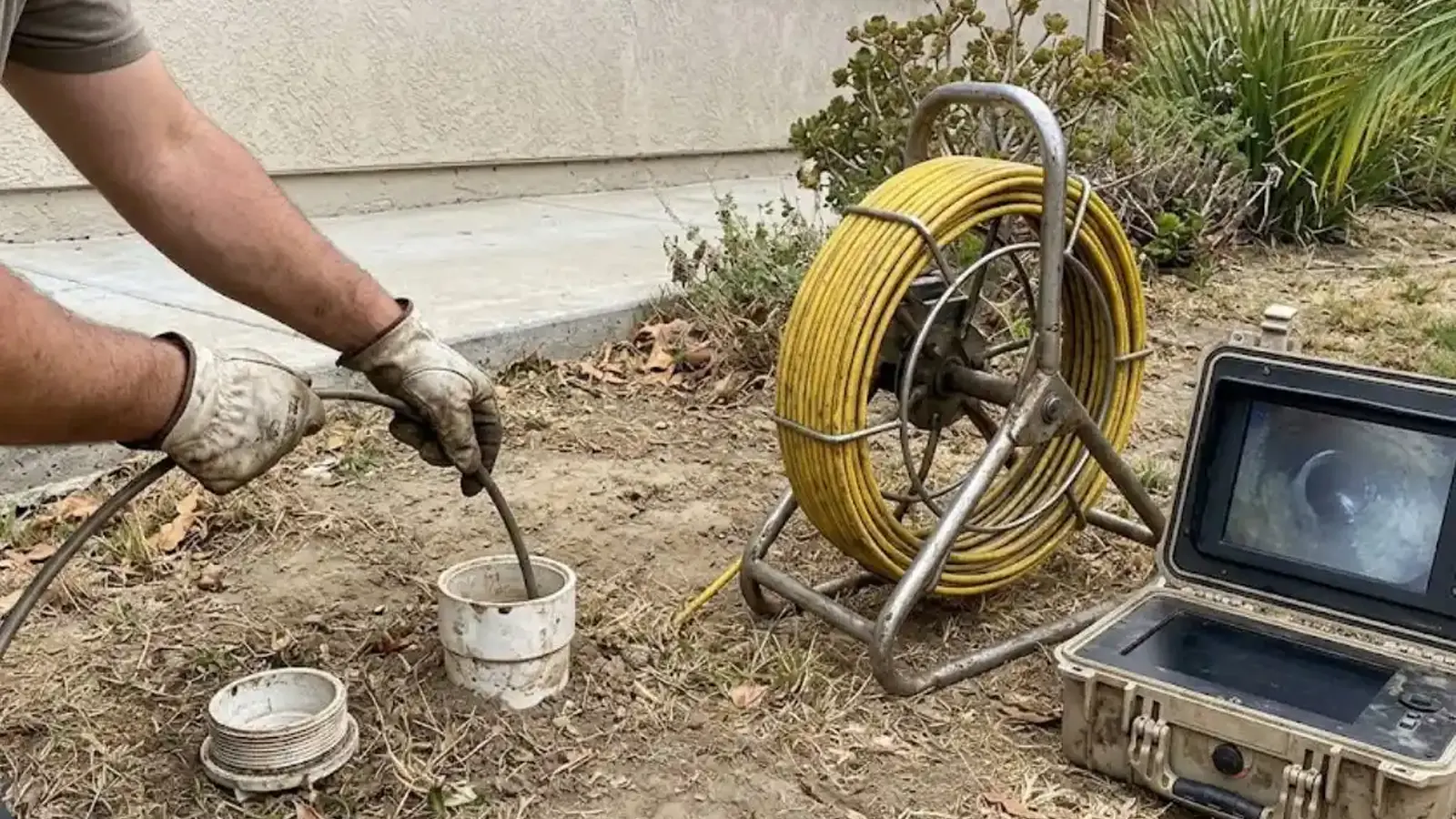
- The camera head goes in on a flexible push rod, and a light and lens show the pipe wall.
- We watch in real time and record. A locator at the head lets us mark any problem spot on the ground above.
- We show you the footage, explain it in plain words, and tell you whether anything needs fixing.
If the footage shows only buildup, you may need nothing beyond sewer line cleaning or occasional jetting. If it shows damage, we describe the repair choices and you decide. Nothing gets fixed just because the camera was in the line.
Before the camera arrives
- Clear a path to the cleanout or the basement toilet, and move boxes and stored items away from it.
- Tell us about past backups, past repairs and any tree removal near the line.
- Stop using water while the camera is in the line.
- Find out whether a sump pump or downspout is plumbed to a drain, so we can note it.
- Keep pets in another room, since the work involves open drains.
If the situation is urgent, such as sewage coming up now, call the 24/7 line and say so. The inspection can follow once the backup is stopped.
Woodridge homes, sewers and who owns what
Village Public Works collects and carries sewage from Woodridge homes to a treatment plant run by DuPage County. Ask Public Works where the Village's responsibility ends, because the camera will show us the lateral up to the street but not who owns each section. The Village's sanitary sewer page explains what to do when you have a backup.
The median Woodridge house dates to 1980, and about seven in ten went up before 1990. Laterals from that era can be clay, cast iron or older plastic. A camera run on a house you plan to own for years is far cheaper than discovering a root-filled line in the first wet spring.
The nearest National Weather Service station, at O'Hare, normally records about 38 inches of precipitation a year. After heavy rain, a line with a hidden crack lets ground water in, and the camera is how you tell that apart from a roof or downspout problem. If we find one, the plan usually points to sewer line repair.
Neighbors in Lisle and the rest of the area get the same inspection process, though the public utility behind the backup call differs by town.
What affects the cost of a camera inspection
Inspections vary from a quick look at one short lateral to a long run with several branches. You hear a clear price before work starts.
Insurance usually treats an inspection as maintenance, not a covered loss, though policies differ. If you plan a claim for a backup, ask your agent whether the camera footage helps document the cause.
An inspection needs no permit, but any repair it leads to may. The Village of Woodridge has adopted the Illinois State Plumbing Code, and permitted work is inspected against that standard.
Questions we hear
A simple lateral takes a short visit. A long line, several branches or a blocked pipe that must be cleared first takes longer. We tell you what to expect when you book.
It is a sensible step, especially for a home built before 1990. Standard home inspections do not look inside the buried sewer line, and the camera does.
It shows cracks, open joints and water entering the pipe. A slow leak into the soil is harder, and we pair the camera with locating and, when needed, a smoke or water test.
Only if you choose to proceed. We explain options such as lining, spot repair or replacement, and you decide with the footage in front of you.
Yes. We inspect the lateral to a rental or small building and can save the video for your records.
The Village collects sewage in Woodridge, so septic is rare. If you have a private line, tell us when you book.
Yes. If a sewage backup is happening now, the 24/7 line can send a plumber who clears the line, and the camera follows to find the cause.
If the footage shows root growth that keeps returning, hydro jetting is often the next cleaning step.