
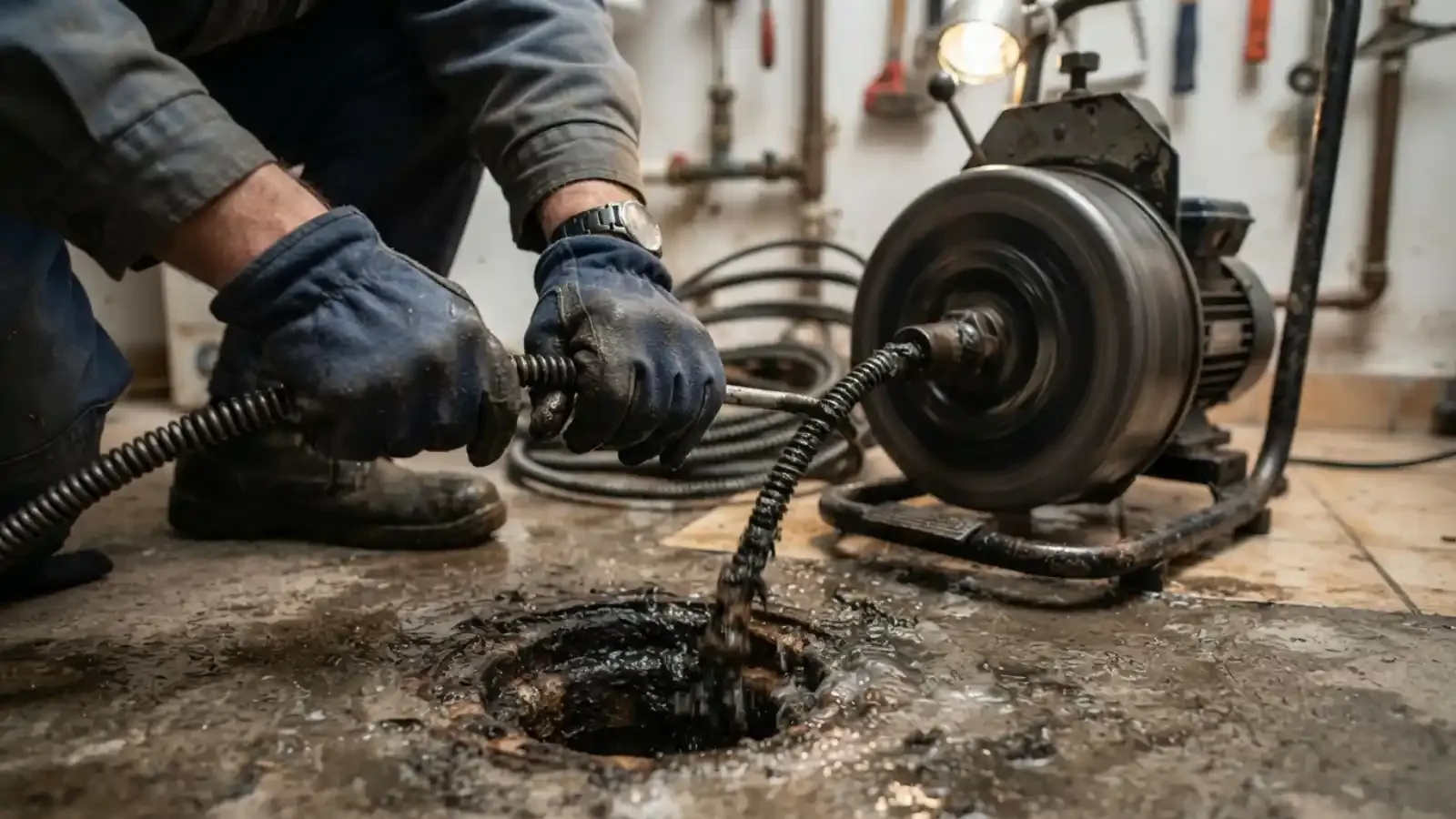
Which drain is it, and how bad is the backup
The fastest way to describe your problem on the phone is to say where the water shows up. One slow sink is a branch line problem. Two fixtures gurgling at once usually points to the main drain, and a floor drain bubbling in the basement is the most urgent sign of all.
| What you notice | Likely location | What we do |
|---|---|---|
| One sink or tub drains slowly | Trap or branch line under that fixture | Cable the line and clear the trap |
| Kitchen sink backs up, dishwasher water is gray | Kitchen branch line, often grease and food solids | Cable or jet the kitchen line past the first elbow |
| Toilet gurgles when the washer drains | Main drain or vent problem | Camera the line, then cable or jet the main |
| Basement floor drain bubbles or floods | Main line or the connection to the sewer | Clear the main, then camera to find the cause |
| Clog returns every few weeks | Roots, a belly in the pipe, or scale buildup | Camera inspection before any repeat clearing |
A real diagnosis always starts with the camera or the cable, not with a guess from the symptoms.
Kitchen sink clogs and grease
Kitchen lines clog because cooking fat cools inside the pipe and traps everything that follows it. The first elbow after the trap is where most of that buildup lives. A plunger rarely reaches it, and a bottle of cleaner only tunnels a small channel through the middle.
We run a cable with a cutting head through the line until it moves freely, then flush it with hot water to carry loosened scraps out. If the pipe is coated along its whole length, we recommend hydro jetting because water pressure scours the walls instead of poking a hole through the blockage.
- Wipe greasy pans with a paper towel before washing
- Run cold water while the disposal is on, then keep it running for a few seconds after
- Keep coffee grounds, eggshells and pasta out of the sink
- Skip the cleaner and call if the water sits for more than a minute
Snaking, cabling and what the machine really does
People use the words snaking and cabling for the same job. A motorized drum feeds a steel cable down the pipe while a cutting head spins at the tip. The head bores through the clog and the cable pulls the debris back out.
Cable size matters. A thin cable fits a bathroom sink but can only punch a hole in a main line. A heavier cable with a blade head clears a four inch main. If a plumber shows up with only a hand auger for a main line backup, you will see the water come back within days.
When a cable is not enough
A cable clears a clog. It does not fix the reason the clog formed. When the line backs up again soon after, we send a camera down to look for roots, a sagging section that holds water, or a cracked joint. The answer decides whether you need more cleaning, a sewer inspection, or a repair.
When a drain problem is an emergency
Treat it as urgent if sewage is coming up through a floor drain or tub, if several fixtures back up together, or if water is spreading toward electrical outlets or a furnace. Stop using every drain in the house, keep children and pets out of the wet area, and call. Do not touch standing water near outlets or appliances.
If you smell gas along with a backup, leave the house first and call Nicor Gas on 888-642-6748 or 911 before anything else.
Why Woodridge drains clog the way they do
About seven in ten Woodridge homes were built before 1990, and the median home dates to 1980. In houses that age, original cast iron stacks and clay or cast iron lateral lines have had decades to build scale and catch roots. If your drain keeps clogging, the age of the pipe is a real suspect.
The Village handles the public sewer in the street, and it asks residents with a backup to call Public Works so the public line can be checked. We clear the line from your house to the connection first. If the camera shows the problem sits in the street main, we tell you to call the Village rather than keep cleaning your side. You can read how the Village handles it on its sanitary sewer page.
Woodridge also prohibits draining sump pump water, pool water, and gutter or downspout drainage into the sanitary sewer. If a sump pump or downspout in your house connects to a drain, a heavy rain can overload the line and push water back into the basement. Redirecting that water outside is part of fixing a recurring floor drain backup.
Roots, belly and repeat clogs
Tree roots enter a lateral line at joints and grow into a mat that catches paper and waste. A cable cuts the roots back but they regrow. A line with a belly, a low spot where water pools, collects solids in the same place every time.
We camera these lines and show you the footage. If the pipe is intact, scheduled cleaning keeps it open. If a joint has failed or a section has collapsed, cleaning stops helping and you need sewer line repair. We say so plainly, even when it means no more drain cleaning calls from you.
Roots
Fine hair roots in a clay line. Cutting and jetting clear them for a season or two.
Belly
A low spot that holds water. Cleaning helps briefly, correction needs repair.
Scale
Mineral and rust buildup in old cast iron. Jetting scours it back toward bare pipe.
Floor drains, tubs and the clogs people ignore
A floor drain you never use can dry out its trap and let sewer gas into the basement. Pouring a quart of water into it every month keeps the seal. If one backs up, the main line is the first place we look.
Tub drains clog with hair wrapped around the stopper mechanism, and many of those clear after we pull the stopper and clean it by hand. Shower drains work the same way. A drain line that leaks into the wall or floor below is a different problem. We find that with a pressure test and a camera, and you can read more under leak detection.
What changes the cost of drain cleaning
Drain jobs range from a ten minute trap clearing to a long main line job, so a single number would mislead you. We give you a clear price before we start working, based on what we actually find.
Insurance policies differ. Many treat a sudden backup differently from a slow one that built up over time, and some require added coverage for sewer backup. Read your policy or ask your agent before you file.
Most clearing work needs no permit, but a repair that opens a drain line does. The Village of Woodridge has adopted the Illinois State Plumbing Code, and permitted work is inspected against that standard.
Questions we hear
Yes. The line is open 24/7 and we take overnight, weekend and holiday calls for backups. Tell us which fixtures are affected and whether water is spreading, and stop using the drains while you wait.
Usually the clog was cleared but the cause was not. Roots, a belly in the pipe, or scale in old cast iron will bring the blockage back. A camera inspection shows which one it is.
We advise against it. Chemicals can sit in a stopped pipe, burn skin, and damage older fittings. If you already poured some in, tell the plumber before they open the line.
Snaking uses a cable to bore through a clog. Jetting uses high pressure water to scour the pipe walls. Cabling suits a simple blockage and jetting suits grease or scale.
Stop using water in the house, keep people and pets away from the wet area, and call. A bubbling floor drain usually means the main line is blocked.
Yes. Property managers and landlords can call about a unit or a shared line. We diagnose the cause so the repair goes to the right party.
Woodridge homes are on the Village sewer system, so septic tanks are rare here. If you have a private system, tell us on the phone.
If the clog keeps returning, a camera inspection finds the cause before you pay for another cleaning.