
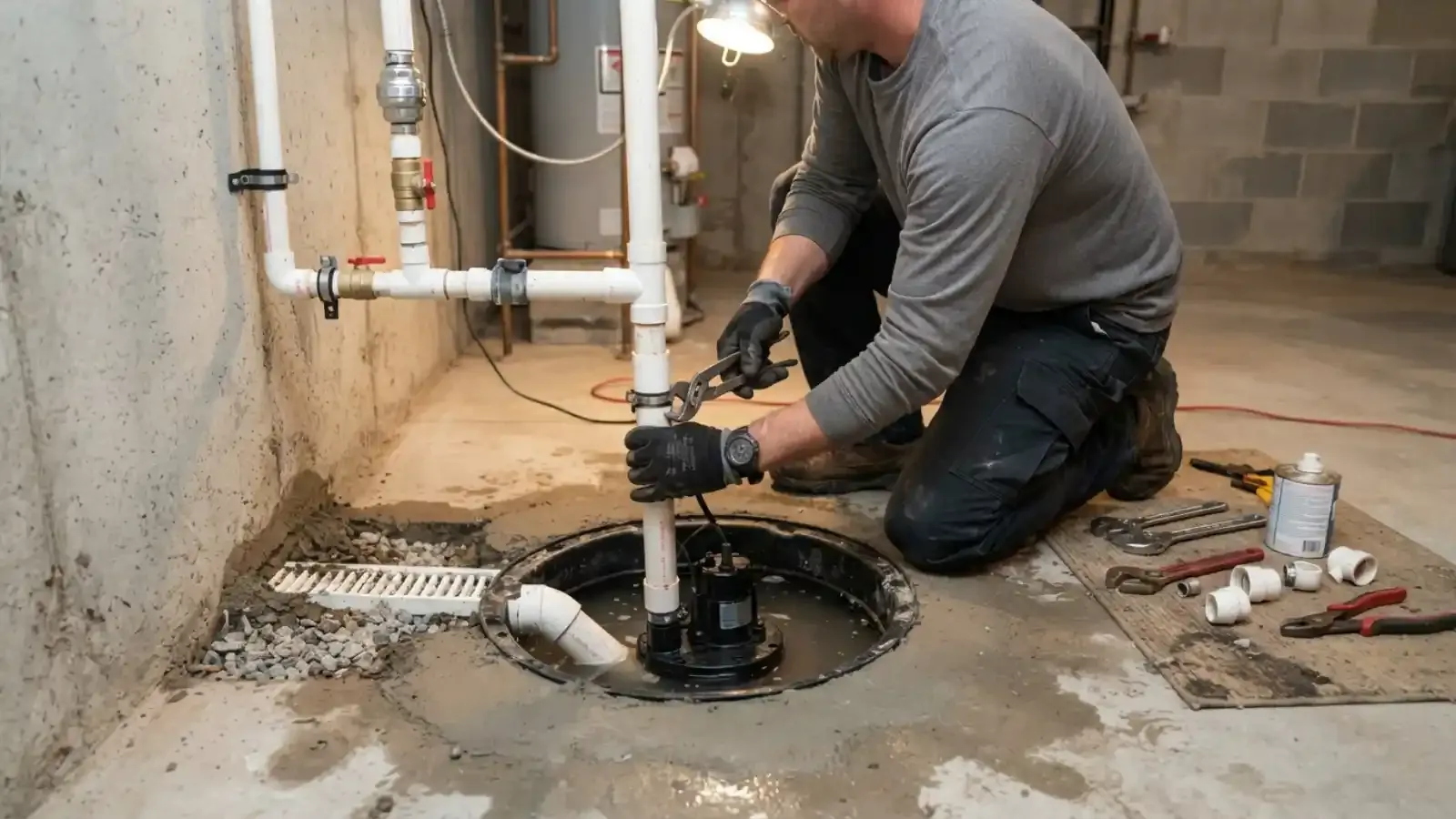
My basement is taking on water and the pump is quiet
A pump that hums but does not move water, one that never turns on, and one that runs nonstop are three different problems. Each has a simple first check and a different fix.
Sump pump repair and replacement is the plumbing answer to all three. It covers the pump, the float switch, the discharge line and the check valve that keeps pumped water from falling back into the pit.
Wet basement tonight, what to do while you wait
A failed pump during heavy rain can put water on the floor in a short time, and we take these calls overnight and on weekends. Same-day appointments are available when the schedule allows.
- Check that the pump is plugged in and that its outlet has not tripped.
- Look for debris holding the float switch up or down, but keep your hands out of the pit if the cord is wet.
- Do not touch any outlet, panel or extension cord while standing in water.
- Move stored boxes and furniture off the floor, and lift electronics up high.
- Photograph the water and the damage for your insurance claim.
- Call the 24/7 line and tell us what the pump is doing, such as humming, silent or running constantly.
Reading the symptoms
| What the pump does | Likely cause | What we do |
|---|---|---|
| Silent while water rises | Dead motor, tripped circuit or stuck float | Test power and float, replace the pump if needed |
| Hums but pumps little water | Seized impeller or blocked intake | Pull the pump, clear it, replace if worn |
| Runs nonstop, even in dry weather | Float stuck on, or a failed check valve | Reset the float, replace the check valve |
| Turns on and off in short bursts | Water falling back from the discharge line | Install or replace the check valve |
| Loud rattling or grinding | Worn bearings or debris in the pump | Replace the pump |
| Water around the pit but pump works | Pit too small or discharge restricted | Resize the pit or clear the discharge |
A pump that is many years old is often better replaced than repaired once more. We tell you which side of that line yours is on.
Where the water goes after the pump
Woodridge prohibits draining sump pump water, pool water, and gutter or downspout drainage into the sanitary sewer. That rule is not just paperwork. Clear groundwater in the sanitary line takes capacity from sewage, and in a heavy rain it can push sewage back into homes. Your sump pump discharge belongs outdoors.
Naperville tells its residents to discharge outside at least 10 feet from the house, and the same sense applies here. Water that lands next to the foundation flows right back to the pit and the pump cycles again. We run the discharge line away from the wall and aim it where it will not wash onto a neighbor's lot or onto a walkway that freezes.
If your pump discharge is currently piped into a basement drain or a laundry standpipe, tell us. Rerouting it is part of the job, and it can fix a repeat floor drain backup that cleaning never cured. A blocked main may also be involved, so see sewer line cleaning if the floor drain backs up as well.
Replacement, installation and backup options
We install a new pump in an existing pit or set a new pit in the floor. A good installation includes a check valve on the discharge line, a pit lid that keeps debris out, and a float switch that has room to swing. A new pit needs the slab opened, so it is a larger job than a pump swap.
Primary pump
The main pump that handles normal groundwater. Properly sized, it should not cycle constantly.
Battery backup
A second pump on its own battery, so water still moves when the power goes out in a storm.
Alarm
A high water alarm that warns you before the water reaches the floor.
Sewage ejector pump
A different pump in a sealed pit, used for a basement bathroom below the sewer line. We can replace one when it fails.
The Village reimbursement and your timing
The Village of Woodridge reimburses 50 percent of installation cost, up to a maximum set for each project type, for an overhead sewer system, a sump pump or a check valve in the home. There is a catch. You need approval first, and the Village pays after you present paid receipts.
Ask Woodridge Public Works for the current terms before any work begins, because jobs started without approval may not qualify. The dollar limit is set by the Village, so we do not quote it. In an emergency replacement, call Public Works the next business day and ask what the program allows.
The Village sanitary sewer page is the place to start. Plumbing work also needs a permit in Woodridge, and Community Development at 630-719-4750 can tell you what applies.
Why Woodridge basements need a working pump
The nearest published weather station, at O'Hare, normally records about 38 inches of precipitation and about 38 inches of snow in a year. Spring snowmelt on top of rain is the combination that makes a pump work hardest, and it is when old pumps fail.
Woodridge sits on high ground above the East Branch of the DuPage River, though that does not keep every basement dry. Water tables rise with a wet season, and houses from the 1970s and 1980s often have older pits and pumps that were never upgraded. If yours is original, plan on replacing it.
Nearby towns share the issue. In Bolingbrook, the Village does not publish a sump pump rule, so ask your own building division what applies at your address.
Some water in a basement is not a plumbing problem. If the pump keeps up and water still seeps through cracks or the wall base after a storm, the cause may be the foundation or the grading. A basement waterproofing review looks at drainage around the house.
What changes the cost of a sump pump job
A pump swap and a new pit are not the same job, and your price depends on which one you have. You get a clear price before work starts.
Insurance policies differ. Many treat a sudden pump failure differently from seepage or groundwater, and water backup coverage is often an added option. Read your policy or ask your agent before you file.
Sump work should follow the plumbing code, and the Village may reimburse part of the cost if you get approval first. The Village of Woodridge has adopted the Illinois State Plumbing Code, and permitted work is inspected against that standard.
Questions we hear
Yes. The line is open 24/7, and we take overnight, weekend and holiday calls for failed pumps and rising water. Tell us what the pump is doing and where the water is, and stay out of wet areas with electrical outlets.
Check the plug and the outlet from a dry spot. Then call. Stay clear of standing water near the panel, and lift valuables off the floor while you wait.
No. Woodridge prohibits sump pump water in the sanitary sewer. The discharge needs to go outside and away from the foundation.
The Village reimburses 50 percent of installation cost, up to a maximum for each project type, after approval and paid receipts. Ask Public Works for current terms before work starts.
The water may be entering through a foundation crack, a window well or poor grading, which are not pump problems. We check the pump, and if it is fine, we point you toward a drainage or foundation fix.
Yes. An ejector pump moves sewage from a basement bathroom or laundry up to the main line, and we can replace one that has failed.
Noise, short cycling, rust at the base and a pump that was in the house when you bought it are common signs. Replace it before the wet season, not during one.
If a basement keeps taking on water even with a good pump, look at the bigger picture with basement waterproofing.