
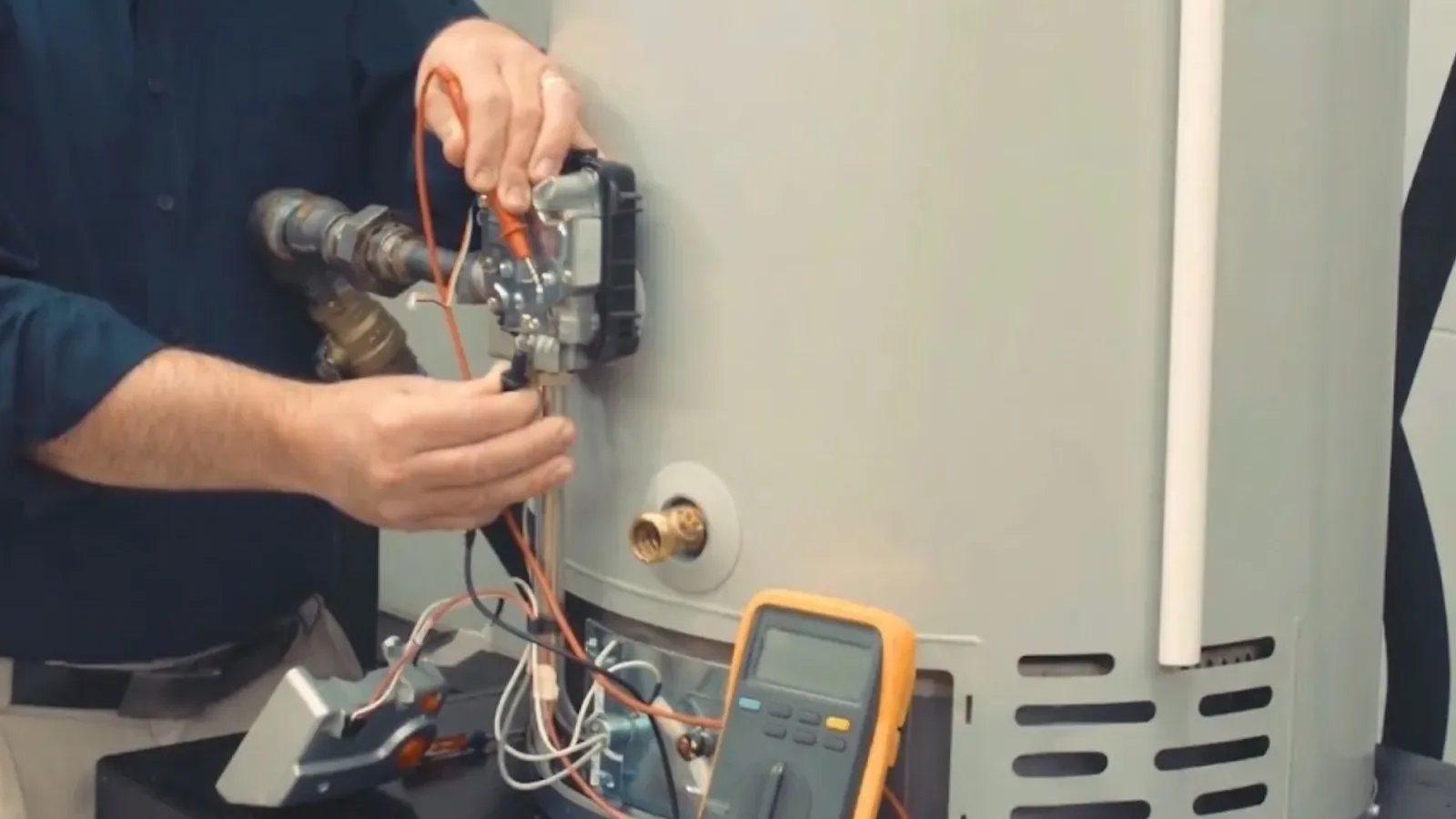
What the rod does inside your tank
The anode rod is a metal rod screwed into the top of a steel tank. It is made of a metal that corrodes more easily than steel, so the water attacks the rod instead of the tank wall. Once the rod is gone, the tank itself starts to corrode.
That is why the rod is called sacrificial. It gives itself up so the tank does not. A tank with a spent rod can still heat water for a while, but rust is working on the lining where you cannot see it.
| Rod type | Typical trait | Watch for |
|---|---|---|
| Magnesium | Protects well and wears faster | Can give a sulfur smell in some water |
| Aluminum | Wears slower | Aluminum residue in the tank |
| Aluminum with zinc | Added to reduce smell | Still wears down over time |
| Powered rod | Uses a small electric current | Needs power and a plumber to install |
The right rod depends on your water. A plumber can match one to your tank.
How often to check it
A common habit is to inspect the rod every few years and replace it when it looks worn. Water that wears rods faster, such as a home with a softener, calls for earlier checks. Heavy hot water use also eats the rod faster, since more fresh water enters the tank.
Woodridge's water comes from Lake Michigan through the DuPage Water Commission. The Village's annual water quality report does not print a hardness figure, so test your tap or ask the Village for its report instead of guessing how quickly your rod will wear.
Signs the rod is spent
- The rod is thin as a wire, or the steel core shows
- Large sections of the coating are missing
- Hot water has a rotten egg smell or a metallic taste
- Rusty water comes from hot taps only
- Popping or rumbling noises from the tank
Before anyone touches the tank
- Gas heater: turn the gas control to off and do not work near a pilot flame or burner
- Electric heater: shut off its breaker before opening anything
- Close the cold water supply and release pressure at a hot tap
- Never remove the rod while the tank is hot or the supply is open
If you smell gas, leave the home first. Move a safe distance away and call Nicor Gas on 888-642-6748 and 911 before calling a plumber.
Why many rods are hard to swap
The rod usually sits under a hex head on top of the tank. It can be stuck from years of mineral buildup and heat cycling, and it needs a long socket and plenty of force. Overhead room is another problem, since a full rod can be longer than the clearance above the tank.
Flexible rods fit tight spaces, but they cost more and need the same care to install. Pipe tape or sealant on the threads is usual practice. A rod that will not budge risks a cracked fitting, so it is a stopping point for homeowners.
If your tank is draining sediment, leaking at the base or very old, a new rod will not repair it. In that case a water heater replacement is the sound choice. Our licensed plumbers look at the tank, the rod and the connections, then give you a clear price before work starts.
Woodridge water heaters and permits
Census-based estimates put the median Woodridge home at 1980, and about seven in ten homes are at least 35 years old. A lot of tanks in those houses have been swapped once or twice already, so check the date on your tank's label before you pay to rod an old unit.
The Village's permit FAQ says a permit and final inspection are required for a water heater. Replacing a rod is maintenance, but if the job turns into a new tank, the permit applies. Community Development, at 5 Plaza Drive, answers questions at 630-719-4750 from 8 a.m. to 4:30 p.m., Monday to Friday.
You can check the license of any plumber working on a tank with the IDPH license verification tool.
Rules in nearby towns
Homeowners in Downers Grove should ask the Building Division at 630-434-5515 whether a water heater needs a permit, since the Village does not state the rule on its page. In Darien, Community Development says permits are required anytime you change anything structural, plumbing or electrical.
When the rod is the only issue and the tank is sound, a water heater repair visit covers inspection, a new rod and a flush of the sediment that has settled in the bottom.
Check the rod before the tank pays for it
Call the 24/7 line to book an inspection. Dispatch can schedule a same-day visit when a technician is free.
Questions we hear
It varies with your water and use. Inspect it every few years and replace it when it is worn to the core or mostly bare.
It is possible on an electric tank with easy access. A gas heater, a stuck rod or a tight ceiling are good reasons to hire a plumber.
Sometimes. The smell often comes from bacteria reacting with the magnesium rod. Changing the rod type or flushing the tank can help.
It can, since softened water tends to wear sacrificial rods faster. Check the rod more often if you have one.
Not for the rod alone, which is maintenance. A new water heater needs a permit and final inspection, so ask Community Development at 630-719-4750.
A tank that is leaking, rusting or noisy is usually past help. A newer tank with a spent rod is a good candidate.
If the tank itself is failing, replacement beats another repair.