
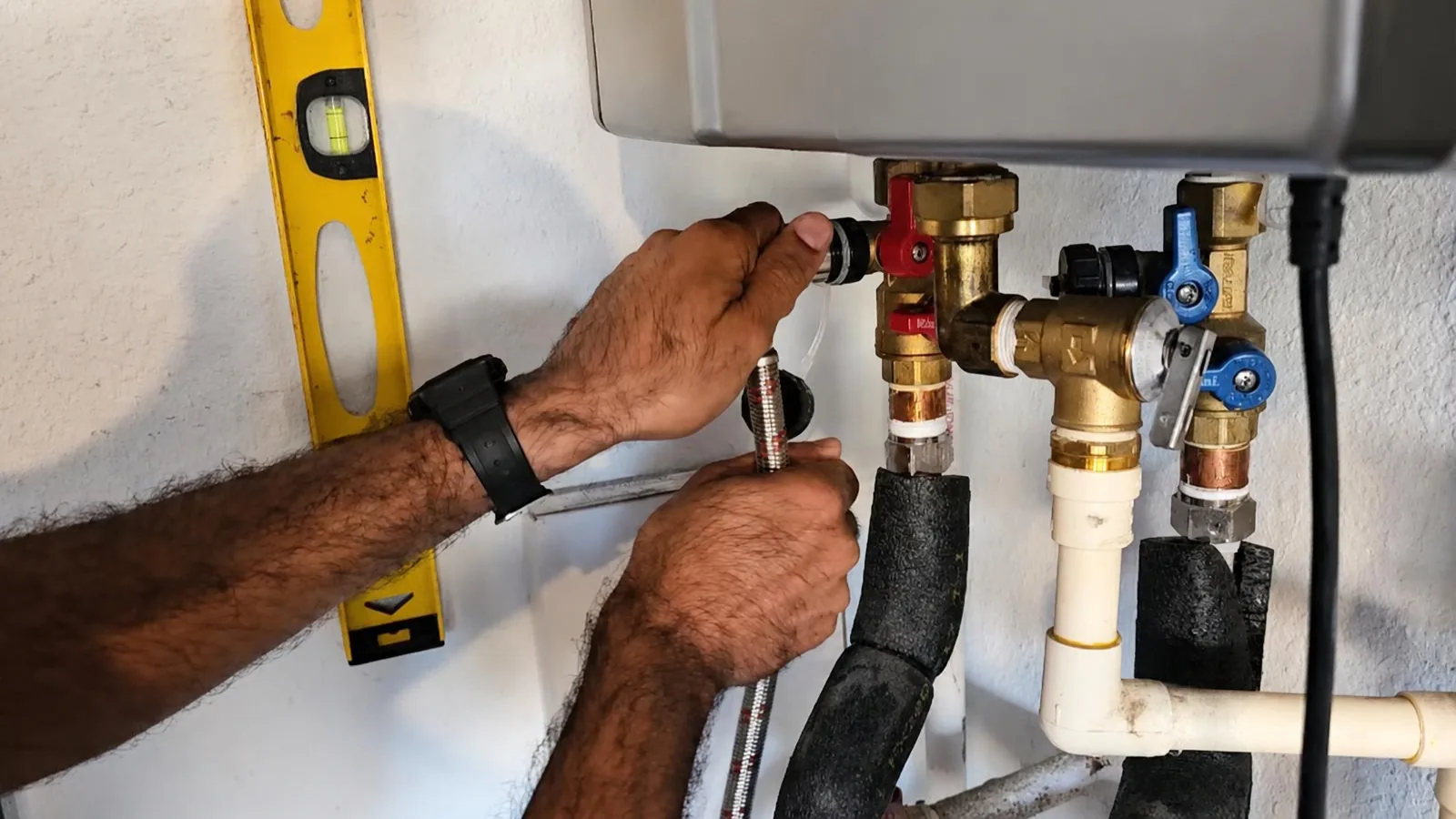
Cost starts with how much hot water you need at once
A tankless unit heats water as it flows, so its capacity is measured by how much hot water it can produce at a time, not by tank size. A bigger household running showers, a dishwasher and a washer together needs a larger unit than a couple living alone.
Bigger units cost more to buy and often need larger gas or electric supply. A plumber sizes the heater by adding up the fixtures that run together and the temperature rise your incoming water needs. Winter groundwater is colder, so size for the cold months. Oversizing wastes money and undersizing leaves you with lukewarm showers.
The factors that change the total
| Factor | Why it changes the cost | What to ask |
|---|---|---|
| Gas or electric | Electric units may need heavy new wiring and breakers, gas units need gas capacity and venting | Which fuel does the house support without upgrades |
| Gas line size | Tankless burners draw a lot of gas at once, so an older small line may need to be enlarged | Is the existing line big enough for the unit and your other appliances |
| Venting | Special vent materials, a new route through a wall or roof, and the length of the run all add work | Can the old tank vent be reused |
| Water quality | Mineral scale coats the heat exchanger, so a flush valve or a softener may be advised | What does my tap test show |
| Location | Moving the unit means new water, gas, vent and drain routes | Can it go where the tank was |
| Condensate drain | High-efficiency units produce acidic condensate that needs a drain | Where does the drain go |
| Permit and inspection | Paperwork and a final inspection are part of the job | Is the permit included in the quote |
| Removal of the old tank | Draining, hauling and disposing take time | Is removal included |
Quotes that list these items separately are easier to compare than a single lump number.
Gas safety comes before cost
A tankless install changes the gas line and the vent. A poor vent can send carbon monoxide into the house. If you ever smell gas, leave right away, move a safe distance away and call Nicor Gas on 888-642-6748 and 911 before you call a plumber.
Do not cut corners to save money here. A licensed plumber tests every gas joint and the draft before leaving.
Why the install can cost more than the unit
Old homes are the usual reason. A tank heater sits on a small gas line and vents through a simple flue. A tankless unit asks more of both, so the supporting work can outweigh the equipment.
Electric models can need a panel upgrade if your service is already full. A plumber and an electrician may both be involved, which adds labor. Ask whether the quote covers all trades or only the plumbing.
Operating cost and long-term thinking
Tankless heaters do not keep a tank of water hot, so they avoid standby heat loss. Savings depend on your use. A household that uses a lot of hot water gains less than one that uses little. Sediment control and yearly service keep the unit efficient.
Tankless units usually last longer than tanks when maintained, but they cost more up front and need descaling in areas with mineral buildup. Weigh the total across years, not the first bill.
Lower upfront need
A tank swap needs fewer changes and often costs less to install.
Higher upfront need
A tankless install needs more gas, vent and drain work, but heats on demand.
Woodridge details that affect your quote
The Village's permit FAQ says a permit and final inspection are required for a water heater. Ask your plumber to include them in the quote and ask Community Development at 630-719-4750 about timing. The Village has adopted the Illinois State Plumbing Code with local amendments, so installations must match it.
Woodridge buys Lake Michigan water from the DuPage Water Commission. The Village's annual water quality report does not print a hardness figure, so test your tap to learn whether scale protection is worth adding. Ask the Village for the latest report.
Census-based estimates put the median home at 1980 and show about seven in ten homes are at least 35 years old. In houses that age, small gas lines and old vent routes are common, so ask for a gas and vent survey before you accept a quote.
Quote checks across nearby towns
Permit rules differ nearby. In Downers Grove, the Building Division handles plumbing inspections and the water heater permit rule is not stated, so ask 630-434-5515. In Bolingbrook, the Village page does not say which jobs need a permit, so ask the Building Division. A good plumber knows the local answer.
Our tankless water heater team surveys the gas line, vent route, electrical supply and drain, then writes a clear price before work starts. If a standard tank suits you better, our water heater installation crew handles that too.
Get a quote that lists every factor
Call the 24/7 line and we will walk through your house. Our licensed plumbers state a clear price before work starts.
Questions we hear
The unit is only part of the job. Gas line size, vent route, electrical needs and permits change from house to house.
It can, depending on your hot water use. Households with moderate use see a different result than large ones, so look at your own pattern.
Often, yes. Tankless burners draw a lot of gas at once, and a line built for a tank may be too small.
Yes. Descaling and filter cleaning keep the heat exchanger working. Mineral buildup is a major cause of problems.
Yes. The Village requires a permit and final inspection for a water heater. Ask Community Development at 630-719-4750.
Usually not. Tankless units often need special vent material and a different route. A plumber checks before quoting.
The best way to compare quotes is to line up each factor, not the final number.