
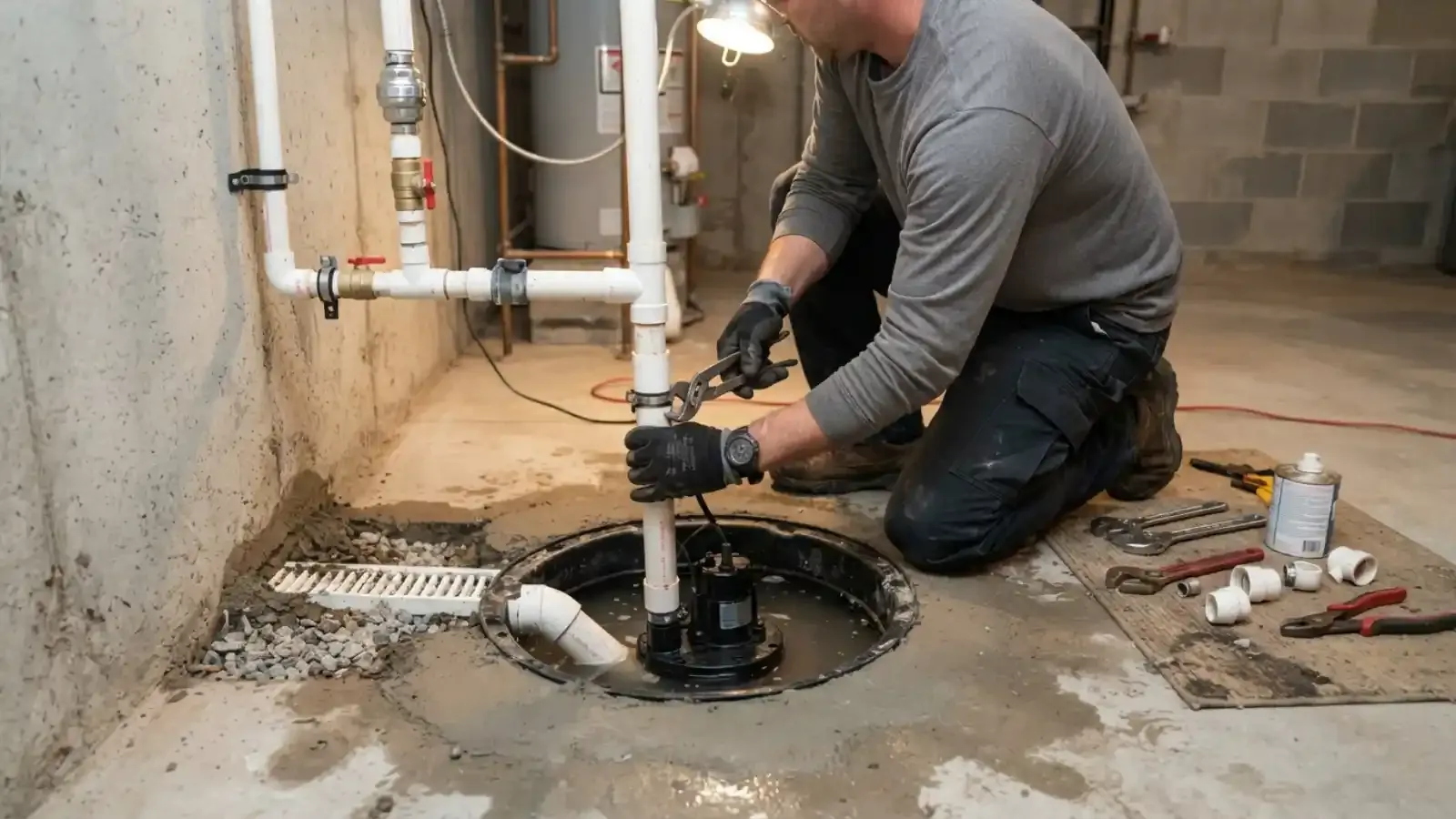
The five parts of a working sump system
A sump system is simple on paper, and each piece matters. A weak link, like a cheap check valve or a discharge pipe that dumps water beside the foundation, is how a new pump ends up failing on the first big storm.
| Part | What it does | What goes wrong |
|---|---|---|
| Pit and liner | Collects water that drains to the lowest point | Too shallow, cracked, or filled with silt and gravel |
| Pump | Lifts water out when the float rises | Float sticks, motor burns out, or the pump is the wrong size |
| Check valve | Stops pumped water from falling back into the pit | Stuck open, so the pump cycles constantly |
| Discharge pipe | Carries water outside and away | Frozen, clogged, or aimed at the foundation |
| Backup power or second pump | Keeps pumping when the lights go out | Missing entirely, or a dead battery |
Many floods happen during storms that also knock out power, which is why backup matters as much as the pump.
Pedestal or submersible, and other choices
A submersible pump sits in the pit and runs quieter. A pedestal pump has the motor above the pit and is easier to reach, but it is louder and usually lasts less. Most basements are better served by a submersible model.
Size the pump to the water coming in, not to the biggest one on the shelf. An oversized pump short-cycles and wears out sooner. Pit depth, how fast the pit refills and the height the water must be lifted all affect the choice.
Backup options
A battery backup pump sits beside the main one and runs when power fails. A water-powered backup uses pressure from the supply line. Each has limits, so choose after you know how often your power goes out and how much water your pit sees.
How the installation day goes
- The plumber marks the pit location, usually at the lowest corner or where water already shows up.
- The slab is cut and broken out, soil is excavated, and the liner is set on a gravel bed.
- The pump goes in on a flat base with the float free to move, and the check valve is added on the discharge.
- The discharge pipe runs through the rim joist or wall and ends outdoors with an adapter that sheds water away from the home.
- The slab is patched, the pump is tested by filling the pit, and the plumber checks the float and the check valve.
Electrical connections are their own trade. The pump should plug into a protected outlet that is not shared with something heavy. If a new outlet is needed, a licensed electrician should install it.
Stop and call if water is already rising
If the pit is overflowing, shut off power to the basement only if you can reach the panel without standing in water. Never wade into water near outlets or a furnace. Keep children and pets upstairs and call our 24/7 line.
Do not run a hose to the floor drain to get rid of the water. That sends it into the sanitary sewer, which Woodridge prohibits.
Sump pumps and the Village of Woodridge
The Village says it is prohibited to drain sump pump water, pool water, or gutter and downspout drainage into the sanitary sewer. Plan the discharge pipe to end outdoors on your lot. Heavy rain adds clean water to the public sewer, and that overload is one reason basements back up.
Woodridge reimburses 50 percent of installation cost, up to a maximum set by project type, for a sump pump, an overhead sewer or a check valve. Approval and paid receipts are required. Call Public Works at 630-719-4753 for current terms before any work starts, because a reimbursement can be lost if you begin first.
The Village's general FAQ lists plumbing and electrical work as permit-required. Ask Community Development at 630-719-4750 whether your pump installation needs a permit and an inspection. Digging outside for a discharge line is another step. JULIE 811, free for homeowners, locates buried utilities, and it asks for at least three days notice before you dig. See the JULIE homeowner page.
Weather sets the load. Chicago O'Hare normals show about 38 inches of precipitation and 38 inches of snow a year, so both spring thaw and summer storms put water in the ground around your home. A pump that sits idle most of the year should be tested before the wet seasons.
Neighboring towns, similar rules
Nearby rules differ, which is useful if you own property across a border. Naperville says sump pumps cannot connect to the sanitary sewer or the basement floor drain and should discharge outside at least 10 feet from the house. Homeowners in Naperville can read that on the city's flooding page. For Bolingbrook, the Village page does not state sump pump rules, so ask the Building Division.
A sump pump only deals with groundwater that reaches the pit. Wall cracks, window wells, poor grading and a failing drain tile also let water in, and a full basement waterproofing plan looks at all of them. For a new pit and pump on their own, our sump pump team can explain the options and give a clear price before work starts.
Get the pit and pump right
Call the 24/7 line to talk through your basement. Our licensed plumbers state a clear price before work starts.
Questions we hear
A straightforward installation in an existing basement is often a single visit. Digging a new pit, running a long discharge or adding backup power can add time.
Outdoors, away from the foundation, and never into the sanitary sewer or a floor drain. Aim it where water drains away from your house and your neighbor's.
The Village has a reimbursement program for 50 percent of installation cost up to a limit by project type, after approval and paid receipts. Ask Public Works for current terms before you hire anyone.
If your basement is finished or holds valuables, yes. Storms that overwhelm a pump often knock out power at the same time.
A stuck check valve, a high water table, or a leaking water line near the pit can all cause it. We check the valve first.
The discharge pipe can, especially if the outlet is blocked by snow or ice. A pipe that slopes down and ends clear of drifts helps.
If you are unsure what is feeding your pit, a plumber can trace the source before you spend on equipment.