
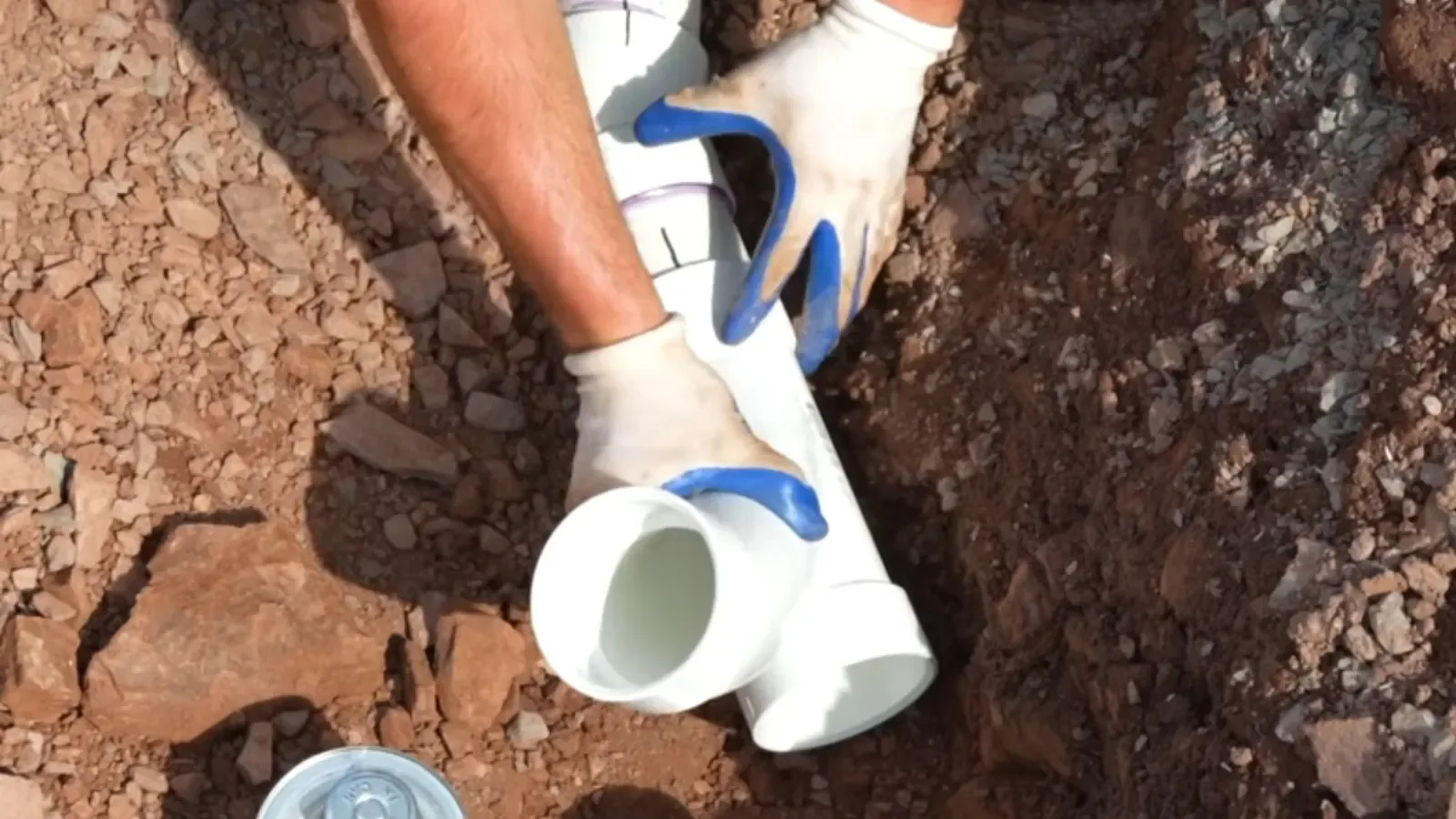
How CIPP lining works
A flexible felt tube is saturated with resin and fed into your sewer line through a cleanout or an access pit. It is inflated so it presses against the pipe wall. Heat, steam or ultraviolet light then cures the resin until the tube hardens into a smooth pipe within the old one.
Before any of that starts, the line must be cleaned. Roots, scale and debris are cut out with a cutter or high-pressure jetter, and a camera confirms the pipe is clear. Afterward the camera goes back in to check the finished liner and reopen the side connections.
- Camera inspection records the damage and measures the line.
- The pipe is cleaned until the walls are bare.
- The resin-coated liner is pulled or inverted into place.
- The liner is cured, then cut open at the cleanout.
- A final camera pass checks the liner and any side connections.
Good candidates and poor ones
Lining works best on a pipe that is still round and in line, with problems that sit in the joints or walls. It struggles where the pipe has shifted, flattened or fallen apart. A liner needs a host pipe to hold its shape.
| What the camera shows | Is lining a fit | Why |
|---|---|---|
| Roots at joints, pipe otherwise round | Often yes | The liner seals the joints and blocks new roots |
| Hairline cracks or porous cast iron | Often yes | A new inner wall covers them |
| Offset joint, pipe pieces out of line | Sometimes | Small offsets can be bridged, large ones cannot |
| Belly holding water | Usually no | Lining follows the dip, so water still sits there |
| Collapsed or crushed section | No | The liner cannot pass or hold shape |
| Pipe that is missing in places | No | Soil erodes behind the damage and needs excavation |
A camera inspection decides this, not the age of the house.
What lining does not do
A liner trims the inside diameter a little, because it adds a layer. It does not fix what is wrong on the public side of the connection. It also does not solve a sump pump or downspout that drains into the sewer. Those are separate fixes, and an honest plumber will list them.
Lining against digging
Excavation exposes the whole pipe and lets the plumber replace it, regrade it and fix a belly. It costs more in yard repair and takes more time on site. Lining skips most of the digging but gives you a repaired pipe at the same grade. If the grade is wrong, lining will not correct it.
Some homes need a mix. A short collapsed section is dug and replaced, then the rest of the line is lined. Our sewer line repair team lays out the options after viewing the footage, and we show you the video. A clear price comes before work begins.
What to know in Woodridge
Village Public Works handles collection and transmission of sanitary sewage, and Woodridge asks residents with a backup to call so the public line can be inspected. Lining your lateral does nothing for a problem in the street main, so find that out first. Read the Village's sanitary sewer page for current steps, and dial 911 after hours.
The Village lists plumbing work as permit-required and says sewer repairs can be same-day permits. Ask Community Development at 630-719-4750 how lining is handled before work starts. Plumbers working in the village must be licensed under state law, and the Village asks for a copy of the license.
Census-based estimates put the median Woodridge home at 1980, and about seven in ten are at least 35 years old. Older lateral lines in clay or cast iron have had decades of joint movement and root pressure, so a camera is worth the time before you assume the pipe is done.
How nearby towns handle sewer service lines
Rules shift across borders, and owners of rental or second properties should check each one. In Naperville, homeowners maintain the sanitary service line, and the city asks residents to notify it before calling a plumber for a backup. Its permit guide lists replacing water or sewer service lines as permit work.
In Lisle, Public Works runs the sanitary and storm sewers, so a backup call starts with the Village. A sewer inspection from our team gives you the video to share with whichever agency answers.
Get the camera footage first
Call the 24/7 line and tell us what your drains are doing. Dispatch can book a same-day visit when a technician is free.
Questions we hear
It depends on the liner material, the installation and the condition of the host pipe. Ask the installer for the product's rated service life in writing.
No. A collapsed section must be dug and replaced. A liner needs an open, round host pipe to follow.
A cured liner has no joints for roots to enter, so it blocks most intrusion. Roots can still pressure the pipe from outside.
Yes. The camera shows whether the pipe is round, where it is damaged and whether lining is possible at all.
The Village lists plumbing work as permit-required and says sewer repairs can be same-day permits. Confirm the process for lining with Community Development.
Policies differ. Many treat sudden damage differently from wear and tear, and some require added sewer coverage. Read yours or ask your agent first.
Lining is a good tool for the right pipe, and the camera tells you whether yours qualifies.